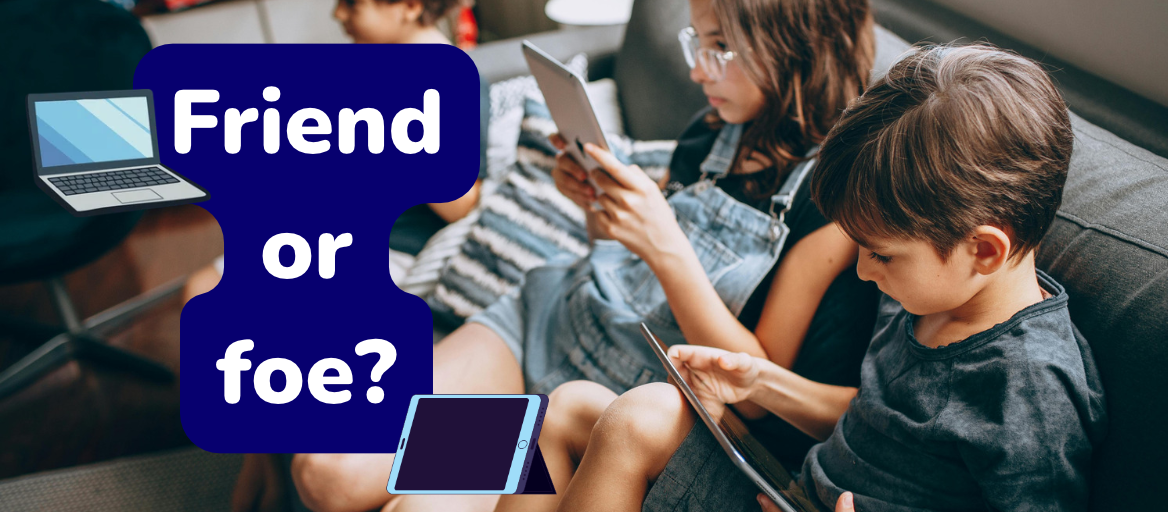
When the on-screen villain is an actual screen
Pixar has a brilliant history of turning our collective cultural anxieties into unforgettable cinematic characters. In Toy Story 5, they’ve done it again by introducing Lilypad: a smooth, glowing tablet character who steps into the role of the villain. It’s a pitch-perfect reflection of modern life. Every parent and educator watching will immediately recognize the tension Lilypad represents. We worry about what these devices are doing to our children, whether they are eroding attention spans, and if they are replacing the tangible, foundational experiences of childhood.
It’s easy to cast the device as the antagonist. Screen time metrics and parental control settings dominate our daily routines, framing technology as an invasive force we must constantly defend against. However, looking at devices through a purely adversarial lens misses the deeper reality. The screen itself isn't the villain. The actual impact of technology comes down to intent, context, and quality of engagement. When we move past the knee-jerk impulse to banish the device, we find that digital tools can actually serve as a powerful engine for equity, human connection, and literacy.
Dismantling the literacy divide
Consider the ongoing challenge of book access. For decades, educators have poured energy into connecting students with books that spark imagination, yet access to literature has remained fundamentally unequal. While some children grow up surrounded by personal home libraries, others rely entirely on what their school or local branch can provide… when they can get there. Physical barriers like limited transportation, budget constraints, underfunded school systems, or a geographic lack of nearby resources frequently isolate young minds from the stories they need. This creates "book deserts" that stall academic momentum before it even has a chance to start.
Digital reading platforms fundamentally alter this landscape. A child who cannot easily catch a ride to the library can instantly explore thousands of titles right from home, bridging the gap between socio-economic hurdles and educational opportunity. Furthermore, representation matters deeply in literacy development. Students hunting for highly specific interests or looking for stories that reflect their unique backgrounds suddenly have a vast universe of options at their fingertips, free from the constraints of what happens to be physically sitting on a single shelf.
Meeting reluctant readers where they are
Beyond expanding sheer access, digital formats excel at engaging reluctant readers. Often, a student's issues with reading is not caused by a lack of curiosity or intellect; they simply haven't found the right entry point, or they have developed an anxiety around the physical act of reading. Digital books offer unique, personalized pathways to building confidence.
Features like adjustable text sizes and specialized fonts for dyslexia remove immediate visual strain. Integrated audio support allows struggling readers to hear pronunciation in real-time, while instant built-in definitions allow them to expand their vocabulary without the embarrassing hurdle of stopping the lesson to ask for help. These elements demystify the text, stripping away the friction points so children can focus on comprehension and the genuine joy of the narrative.
From screen time to meaningful time
This shift requires us to rethink our approach to screen time at home and in the classroom. The conversation must evolve from a quantitative debate about how many minutes a child spends looking at a glass pane, to a qualitative discussion about what they are doing during those minutes. Passive consumption—scrolling through endless feeds of algorithmic video—is entirely different from the active, cognitive engagement required to read an immersive digital book or interact with an educational text.
Teaching students how to navigate technology in healthy, intentional ways yields far greater rewards than merely trying to eliminate it. “Protecting” children from the digital world by enforcing total bans is a short-sighted strategy for a future that demands sophisticated digital fluency. True literacy in the modern era includes knowing how to evaluate information, manage digital distractions, and make conscious choices about when a device serves one’s personal goals and when it actively detracts from them. We must mentor children to be mindful creators and consumers, rather than treating them as helpless victims of their devices.
A harmony of print and pixels
Embracing digital tools does not diminish the timeless value of a physical book. The tactile experience of turning paper pages, sharing a bedtime story, or browsing a quiet library shelf remains a foundational part of childhood development, and a favorite hobby of mine. There is a deep, irreplaceable human element to passing a well-worn book to a friend or watching a child trace words on a physical page.
Our objective moving forward should be harmony rather than an arbitrary choice between print and digital mediums. We do not live in a zero-sum world where one must die for the other to thrive. Instead, we must leverage every single format available—print, eBooks, read alongs, and audiobooks—to ensure that children have a rich, multi-layered ecosystem of literacy support tailored to their individual growth.
Lilypad serves as an excellent caricature of our digital anxieties, but real-world education requires a more pragmatic, human-centered outlook. Technology at its best does not replace human interaction; it acts as a bridge to it, connecting a young reader to an author’s mind, a teacher’s lesson, or a parent's shared moment of discovery. The ultimate worth of any tool lies entirely in how we choose to employ it. When implemented with human intent and clear purpose, digital tools break down barriers to equity, amplify the work of passionate educators, and help more young people discover a lifelong love for reading.
Published Oct 29, 2026

Renee Davenport
Davenport is a former elementary school teacher and educational technology leader who serves as OverDrive's vice president of North American Schools.