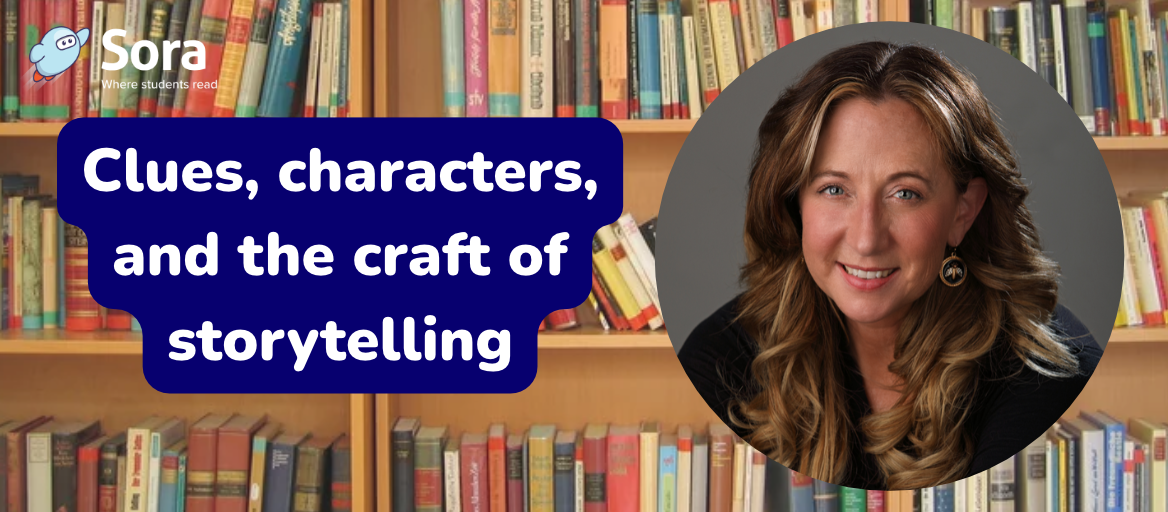
Clues, characters, and the craft of storytelling
What makes a good mystery? A few suspicious characters, a handful of clues, and a story that keeps readers guessing until the very end. But for author Taryn Souders, a memorable story is about more than solving a mystery. It’s also about the people, relationships, and real-life lessons readers discover along the way.
In Secrets of the Broken House, Souders invites readers into the small town of Everson, where 13-year-old Tucker starts asking questions after a neighbor’s suspicious death. As part of this year's Sora x Libby Reads celebration, the book will be available to borrow for free as an ebook and audiobook from November 24 through December 8, giving students, educators, and families a chance to solve the mystery together. Enter your class here for a chance to meet the author, add signed books to your classroom library, and bring a little extra excitement to your reading experience.
To wrap up the celebration, join us on December 8 for a live conversation on the inspiration behind the story, the characters and themes that bring it to life, and Taryn's creative process as an author.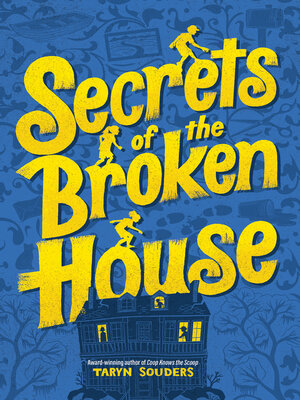
Secrets of the Broken House
by Taryn Souders
Also available as Audiobook
In the small, southern town of Everson, goats can run for mayor, the mail is always late, and nothing all that bad ever happens. That is, until thirteen-year-old Tucker finds Miss Geraldine dead at the bottom of her stairs. At first glance, it looks like an accident. But Tucker has always had a knack for noticing details that others overlook, and the details surrounding Miss Geraldine's death just aren't adding up.
Miss Geraldine was miserable and mean. Miss Geraldine was murdered.
The whole town seems to have reason to want her dead, which makes Tucker's search for the truth nearly impossible. The more he investigates for clues, the more danger he finds himself in, and the more he realizes that maybe Everson was never as safe as he once thought it was. Anyone could be the killer, and in a small town that loves to gossip, if Tucker isn't careful, he could be the next one to have an "accident".
We caught up with Souders to talk about the books that inspired her, the challenges of writing mysteries for young readers, and what she hopes readers take away from her stories.
What's the first book you remember loving as a kid, and how did it shape you as a writer?
The first book I remember loving as a kid was But No Elephants by Jerry Smath. I think I first read it (or more likely, my mom read it to me) in a doctor’s office. Later on, we got our own copy.
I still have it, and whenever I do school visits, I tell the kids about this book. I think the reason I kept returning to this story over and over again was because I saw myself in the main character—despite the fact Grandma Tildy was a little old lady! Through that story I learned we both LOVED animals. It was something we had in common. I believe it was having that “something” that subconsciously shaped how I create characters today.
But No Elephants showed me a character doesn’t necessarily have to look like me or be the same age in order for a book to be enjoyed. Although having a blue eyed, red head as character is always nice for me (it’s one of the reasons I always have a redhead in my books).
I always want to make sure there’s a character in a book that readers, no matter their age, where they're from, or what they believe, can relate to and see themselves in—even if it’s something as miniscule as you both love animals.
What have you found to be the hardest part of writing – and how do you push through?
Because I write mysteries where kids solve the crime and not trained detectives, a big challenge I face is making that seem realistic without portraying law enforcement as incompetent. I have a lot of respect for law enforcement and that's something I want to avoid. So, one of the ways I solve that issue is I make my characters withhold information from the police. Either they think they’ll get in trouble if they share it or maybe they don’t realize how important what they know really is, or something along those lines. And of course, listening to the suggestions and recommendations of my critique group is always so helpful and encouraging when I’m struggling with a scene or chapter.
Have you ever wanted to give up on reading or writing a story? What kept you going?
Absolutely! And I would say there's nothing wrong with taking a break from something whether it be a writing story or reading one (unless it’s homework, and then you got to do it!)
There have been times when I’ve set a book down and started another one because it just didn’t keep my attention. However, that's not always due to poor writing. Sometimes my brain is so distracted, and I find it difficult to focus on reading some books--particularly if they're using a lot of description and figurative language. I will mark my place, try a different book, and then come back to my unfinished one when my mind is in a different, calmer place.
There have also been times when I'm writing a story and realize the timing isn't right and I need to put it in a drawer. I'll eventually go back to finish it, but maybe I just want to tell a different story . . . and so I do! I don’t ever want to “force” a story out.
What is one book you would recommend to a reader struggling to find something they enjoy?
I definitely have some favorite authors and Gary Schmidt is at the top of that list! My favorite book is The Wednesday Wars, closely followed by Okay for Now.
What do you hope readers feel when they finish one of your books?
I want readers to come away with a deeper understanding of human nature and relationships. My books are filled with flawed characters—just like life—and I hope after finishing a book, readers can take something “relational” away and apply it to their own lives. In Secrets of the Broken House, for example, one of the central themes is the personal destruction that comes from holding a grudge. As Miss Rowena puts it, “Holding a grudge is like taking poison and expecting the other person to die.” If a reader recognizes a similar situation in their own life, my hope is this story offers a bit of insight to help them solve a problem.
Published Nov 17, 2026

Maddi Hebebrand
Maddi Hebebrand is an integrated marketing specialist for Sora. When she's not working or reading, she can be found playing with her pets, attending local concerts, or spending time with friends and family. While Maddi loves reading across genres, some of her favorite titles include the Dungeon Crawler Carl series by Matt Dinniman, Mary by Nat Cassidy and Witchcraft for Wayward Girls by Grady Hendrix.